Canadian cannabis consumers have evolved. But the way products are merchandised in dispensaries hasn’t kept up.
New research from the Dispensary Insight Group (DIG) highlights a growing gap between what customers want and what cannabis menus are delivering — a gap that may be costing the industry trust, sales, and long-term growth.
“THC and price aren’t enough anymore,” says Scott Peris, founder of DIG. “Even the average consumer has deeper demands than that. Just because they’re not saying it in the dispensary doesn’t mean they don’t feel it.”

What the Data Tells Us
DIG surveyed hundreds of cannabis consumers across Canada, and the numbers speak volumes:
- 94% of consumers express energy needs beyond “indica, sativa, hybrid.”
48% are more likely to purchase an edible made with real fruit.
71% have sweetener preferences that include low sugar, no sugar, or natural sweetener.
- 32% say craft is a key purchase driver.
- Menus including quality cues like Live Rosin reduce consumer fixation on THC by up to
50%.
But in most stores, this data isn’t reflected. Menus still default to THC and price, forcing consumers into choices that don’t reflect their values or needs.
“They’re stuck in THC tunnel vision,” Peris says. “Not because they want to be, but because menus aren’t giving them better options.”
The Real Cost of a Bad Menu
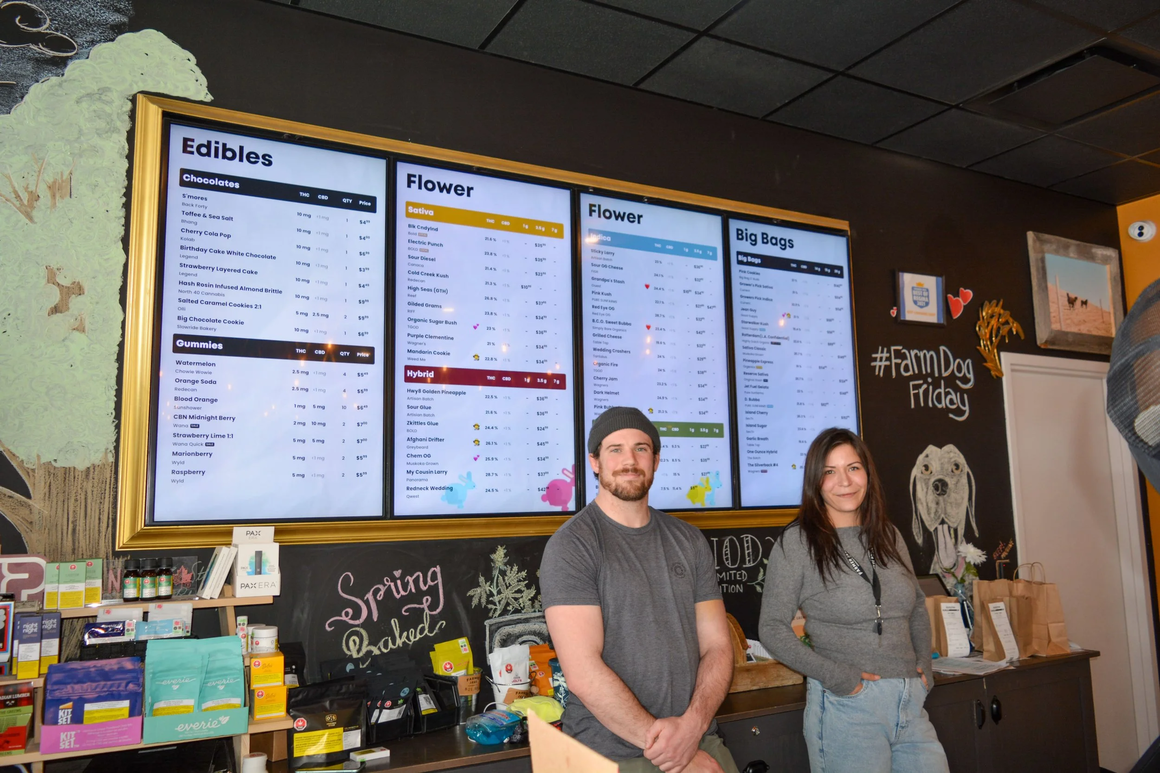
While technology and automation are often the go-to solutions to improve processes, the problem is bigger than that. It’s about how the entire retail experience is grounded in the first thing a customer sees: the menu.
“Menus are not just a list of products,” Peris says. “They’re the primary tool for information transfer. They connect the customer to the product, the budtender to the story, and the brand to the experience.”
When menus are wrong, vague, or overly simplistic, it erodes trust and excitement. That’s why retailers like Lake City Cannabis are pushing for more intentional merchandising.
“There’s so much customization available but it doesn’t have to lead to analysis paralysis,” says Ryan Roch, founder of Lake City. “Budtenders can still build great menus that speak to consumers clearly and spark better conversations.”
Roch points to things like premium tip labels for pre-rolls and flavor badges for infused products: “Someone sees ‘premium tip’ and immediately goes, ‘That’s the one I want.’ Or they
ask, ‘What’s that mean?’ and now you’ve got a conversation, not just a transaction.
You see something called ‘Tiger Blood’ and you add a simple ‘fruit’ badge — now it makes sense. That’s how you turn a curious customer into a confident one.”
Dispensaries Can Do Better, and Consumers Know It
For consumers to walk out of a dispensary satisfied, they need to see themselves reflected in the merchandising — in flavor, in quality, in the subtle details that say “this product was made for you.”
And right now, too many menus fall short.
“If you’re still only showing THC and price, you’re not just underserving your customer, you’re training them to care less,” Peris says. “That’s bad for everyone.”
While platforms like BudSense and Budvue are helping dispensaries implement richer, more dynamic menus, the call to action is industry-wide.
It’s time to start treating cannabis menus not as a formality, but as the foundation for dispensary operations, trust, education, and long-term customer loyalty.
About Dispensary Insight Group (DIG)
Dispensary Insight Group (DIG) is a cannabis research and strategy organization focused on understanding real-world consumer behavior and helping brands and retailers align with what customers actually want, not just what the data says on paper.
For more information, visit: https://dispensaryinsightgroup.co
Press Contact: Scott Peris – [email protected]
Disclaimer:
Any advice or guidelines revealed here are not even remotely a substitute for sound medical advice from a licensed healthcare provider. Make sure to consult with a professional physician before making any purchasing decision if you use medications or have concerns following the information and details shared above. Individual results may vary as the statements made regarding these products have not been evaluated by the Food and Drug Administration. The efficacy of these products has not been confirmed by FDA-approved research. These products are not intended to diagnose, treat, cure or prevent any disease.
*These statements have not been evaluated by the U.S. Food and Drug Administration. This product is not intended to cure or treat any disease.