For marketing leaders in the medical device, pharmaceutical, and life science industries, the tradeshow circuit is a critical, high-stakes environment. You’re not just showcasing a product. You’ve got to be effective in building trust with surgeons, networking with hospital administrators, and educating clinicians on complex innovations.
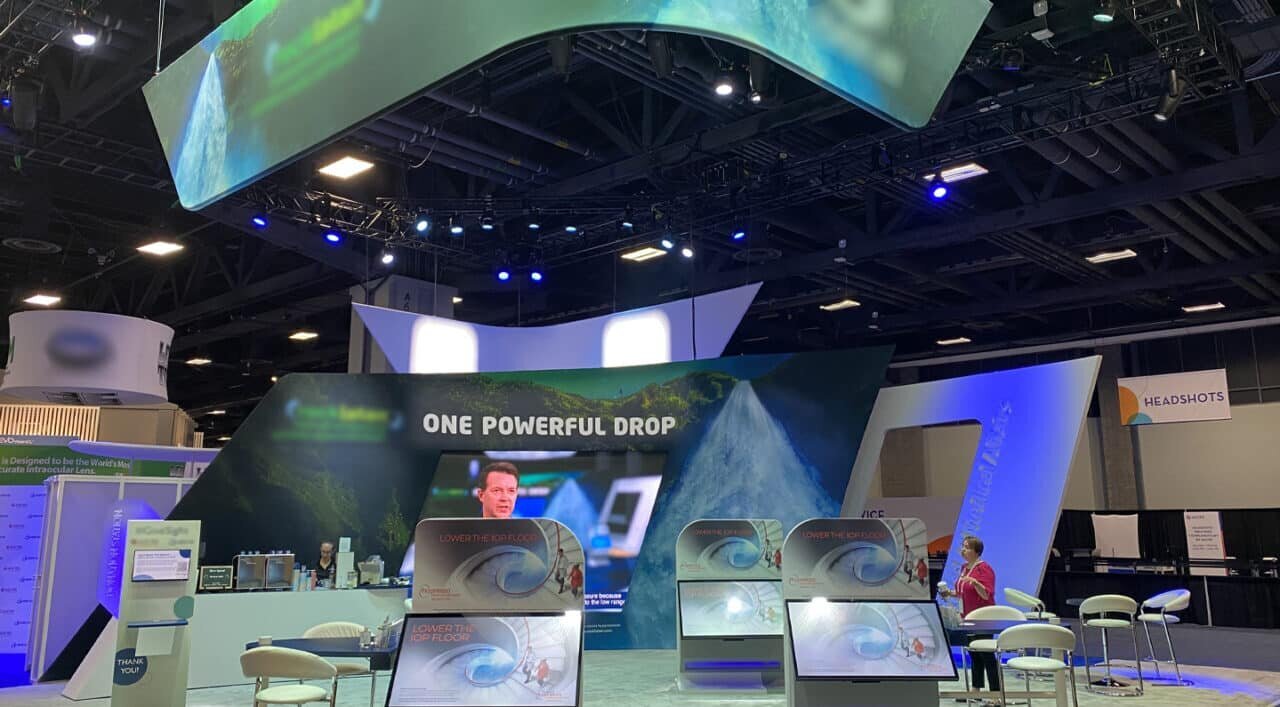
So, you’ve secured your booth space at a major congress. Now comes a critical question: Do you rent or purchase your exhibit?
It’s tempting to look at this as a simple math problem, but the sticker price is only one part of a complex equation. This decision impacts your brand flexibility, your long-term budget, and your team’s sanity on the show floor. Making the right choice requires a discovery process, starting with a fundamental question about your strategic goals.
The First Fork in the Road: Splash or Budget?
Before reviewing a single proposal, you need to identify your primary driver. When our clients come to this fork in the road, their decision tree is almost always based on one of two goals: Budget or Splash.
If your marketing plan demands a brand-new, jaw-dropping, “you-had-to-be-there” experience every single year, you are on the splash path. You want to be the “belle of the ball” at every show, with new structures, innovative engagement technology, and a look that ensures you are the main attraction. For this strategy, renting is almost always the answer. It provides you with maximum creative flexibility to completely reinvent yourself from show to show, without being tied to a single set of assets.
But let’s say your goal is to maximize your investment over time. In that case, you’re on the budget path. This doesn’t mean your exhibit will be “cheap.” Owned assets can make a powerful impression at shows. However, by purchasing your booth and other resources, you’re making a wise, long-term investment. With this approach, the number of shows you attend annually is key.
Frequency as a Decision Driver
When it comes to renting or buying, what’s the tipping point? That’s a critical question. In the past, the rule of thumb was that if you planned to use the same exhibit configuration at three or more shows per year, purchasing made the most financial sense.
But things have changed. Following the pandemic, with rising costs for materials, labor, and shipping, the breakeven point has shifted. The new magic number is two.
If you plan to deploy the same exhibit assets more than two times a year, purchasing is likely the most cost-effective solution. You can depreciate the asset over several years, and the per-show cost will drop significantly. If you exhibit only once or twice a year, or if your booth size and configuration vary for each event, renting stands out as the financial winner.
Beyond the Purchase Price: The Comprehensive Cost of Buying
A common mistake we see with exhibit assets is comparing the one-time purchase price to a one-time rental fee. What many people don’t consider is that the initial outlay for a purchase is just the beginning. If you buy, you have to factor in the total cost of ownership (TCO). TCO includes several significant, ongoing expenses that are not typically included in a rental agreement.
- Storage. This is the biggest one. Your custom exhibit is a large, valuable asset that requires a safe, climate-controlled storage space between shows. You’ll have to pay monthly storage fees for this, which can add up quickly.
- Maintenance and Refurbishment. Tradeshow exhibits are shipped across the country, assembled, and dismantled. They get dinged, scratched, and worn down. When you own the asset, you’re responsible for the repairs, touch-ups, and upkeep to ensure it looks pristine every time you use it.
It’s also important to know which costs are a “wash”—meaning you’ll pay for them whether you rent or buy assets. These include shipping and logistics, warehouse handling, and show floor labor.
The “Rent and Learn” Approach
Beyond the clear financial benefits for infrequent exhibitors, renting offers other advantages, especially for organizations new to trade shows. We often tell first-time exhibitors: “Rent and learn; purchase and fear.”
Renting allows you to “try a booth experience on for size” before you commit to a significant capital investment. Your first few shows are a learning experience. You might find that the traffic flow is wrong, the demo stations are too small, or your audience doesn’t respond to a particular feature. Renting makes you nimble, giving you the agility to gather intel and make changes for your next show without having to scrap a pricey asset.
This flexibility is also crucial if you serve different audiences. Oncology surgeons have different wants, needs, and expectations than pediatric nurses. If you have to shift efficiently (from a science-data focus to warm, empathetic engagement, for example), a rental structure allows you to easily adapt your graphics, messaging, and environment to meet different needs.
Potential Downsides: What to Know Before You Rent
Of course, renting has its limitations. The primary trade-off is between customization and what our creative team sometimes refers to as the “coolness factor.”
While modern rental solutions are far from generic, a purchased asset almost always allows for a higher degree of unique architecture and finishes. A rental property (like a rental car) may also show minor wear and tear. You might see some scuffs or dings that won’t be present on your own carefully maintained booth.
Finally, lack of availability is a risk. If your show presence relies on a specific, high-demand rental component, you should book it well in advance.
The Hybrid Solution: An Insider’s Rule of Thumb
The good news is that this isn’t an all-or-nothing decision. In fact, most exhibits are hybrid solutions.
You can rent the main structure and purchase the custom elements. This strategy offers the “wow” factor of a custom build, combined with the financial and logistical ease of a rental.
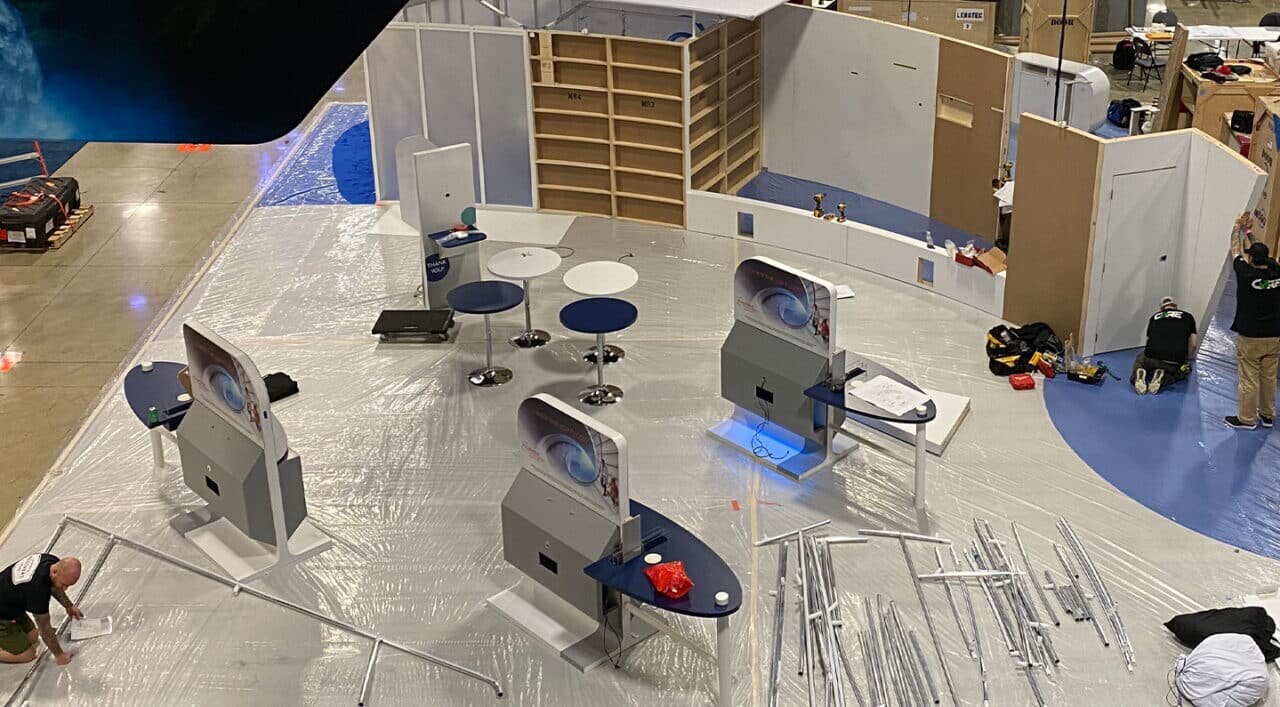
Here’s an insider’s tip we often share: A great hybrid strategy is to purchase your high-touch, eye-level, and below components—such as custom reception counters, demo kiosks, and workstations—and rent the large-scale, above-eye-level structures, like walls and hanging signs. That way, you focus your budget on the custom elements that booth visitors will interact with.
A Final Caution: Don’t Fall for the “DIY Tech” Trap
One final note on a related topic: ancillary technology like monitors and A/V. This equipment is almost always rented, largely because the technology becomes obsolete so quickly.
It can be incredibly tempting to “save money” by running to a local big-box store to buy a $400 monitor instead of paying the $2,000 show rental fee. However, exhibitors may regret that approach.
This decision is a classic trap that trades short-term savings for huge logistical headaches. You have to figure out how to transport the item to your booth (which often violates drayage rules), locate the correct mounting brackets, ensure you have the necessary software and cables, and then determine how to ship it home or dispose of it.
We’ve seen teams burn an entire day of setup time—and add incredible stress to their lives—trying to manage a “cheap” monitor. A professional rental fee includes all of that: the correct commercial-grade tech, delivery, installation, and support. It’s worth every penny.
Beyond the Booth: Choosing the Right Experiential Marketing Partner
Whether you rent or buy resources for a healthcare tradeshow, it’s essential to have the right experiential marketing partner. They’ll get to know your business and understand your goals, target audiences, and show schedule before advising you on the rent-versus-buy choice and other critical decisions. Then, you can build a tradeshow strategy that truly delivers.
If you’re seeking a true strategic partner for your next healthcare congress, let’s talk. Contact Slate360 to discuss your plans and goals and whether renting or purchasing is right for you.
About Slate360
Our team of seasoned healthcare industry pros crafts unique, immersive exhibit experiences that attract attendees and create lasting impressions of clients and their offerings. We work as an extension of a client’s team to streamline strategy development, execution, and analytics and to ensure an onsite or virtual trade show presence furthers their marketing objectives. https://slate360inc.com/
Slate360 Media Contact
Pam Laferriere, 657-204-1916