Successful tradeshow marketing needs to be about more than securing a good space and having interesting and informative content. In the competitive world of medical devices, pharmaceuticals, and life sciences, the physical layout of your exhibit acts as a silent partner in your sales strategy. It determines how people move through the space, how long they stay, and the impression they develop of your brand.
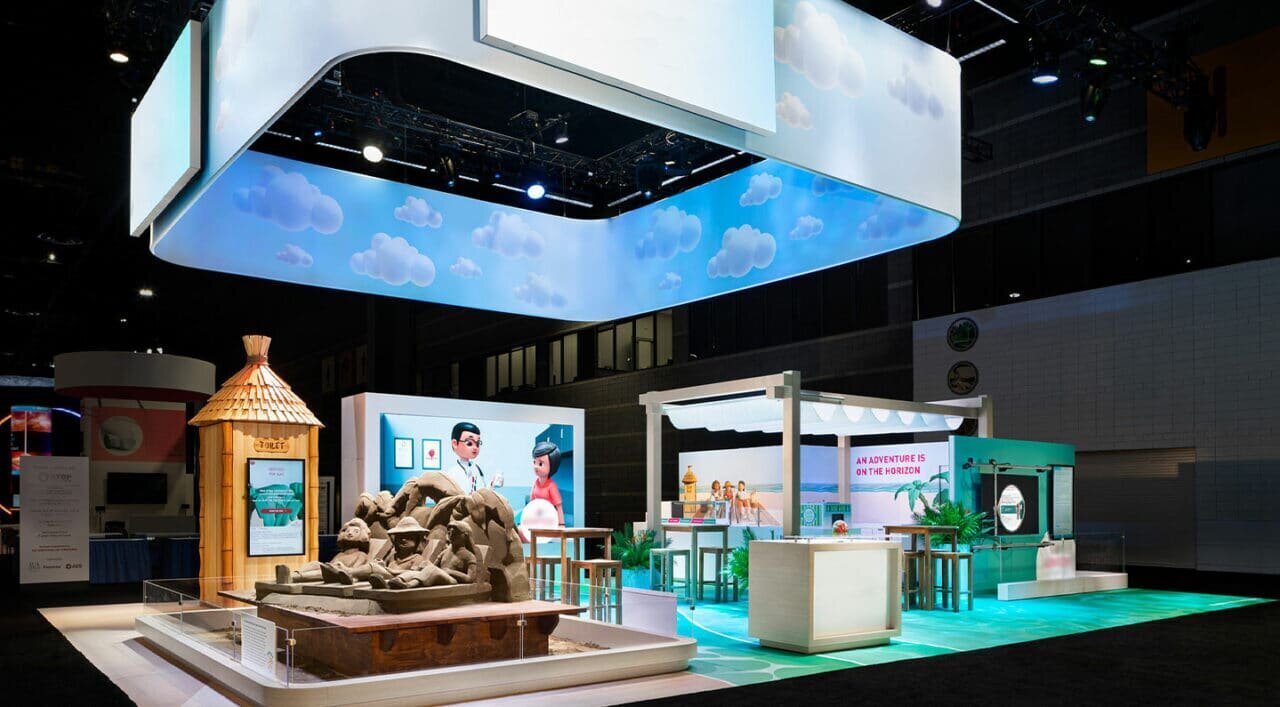
Understanding the subtle ways that layout impacts attendee flow and engagement can be the differentiator between an exhibit that feels like a crowded hallway and one that serves as a starting point for productive conversations and a launching pad for profitable relationships.
Story Before Structure: The Slate360 Philosophy
The design process at Slate360 starts with a deep look at the narrative. Before a single wall gets positioned or a screen gets mounted, the focus has to be on the story the client needs to tell. Designing a space is not just about filling a 20 by 20 footprint with furniture. Instead, it is about identifying exactly what the client wants the attendee to see and do.
Are they looking to build curiosity around a new product pipeline? Or is the goal to finalize a high-stakes sales transaction for a complex diagnostic device? The physical path an attendee takes should be a real-world manifestation of that corporate direction.
Effective layouts grow from in-depth conversations about the company’s ideal marketing trajectory over the next several months or even years. Every event has its own characteristics, and the people at a major oncology congress have different expectations than those at a small regional medical meeting. By understanding and acting on the desired outcome, the ideal structure emerges naturally. This approach ensures that every square foot of the booth serves a purpose, whether it is a call to action on social media or a quiet corner for a clinical trial discussion.
Designing for Dwell Time and Deep Engagement
Dwell time is a vital metric for companies that deal with complex medical products. If an attendee spends only 30 seconds in your space, they are very unlikely to grasp the mechanism of action of a new drug or the technical benefits of a surgical robot. To extend this time, designers have to strategically place “attention magnets” throughout the space.
One common debate involves where to put a hospitality offering. Placing a coffee bar near the aisle can effectively draw people in, but it might also create a bottleneck that keeps them from exploring deeper into the space. Positioning hospitality further into the booth can prevent entry pinch points, but may encourage visitors to pass by key messaging and engagement stations on their way to their espresso.
Engagement is also heavily influenced by staff and their interactions with the layout. The best designs include dedicated areas for team members to qualify leads. These professionals weed out the people who are only there for the catering and move those interested in the company’s offerings to the right sales representatives.
If a line starts to form for a popular activity or hospitality item, the surrounding space should include kiosks or screens that tell a continuing story. This ensures that, even while they are waiting, attendees continue to absorb brand information.
Navigating Compliance in Life Science Layouts
In the healthcare sector, compliance is much more than a legal requirement. It is a major design constraint.
Layouts have to maintain strict separation between Medical Affairs and Commercial activities. For example, an attendee who is standing in the Medical Affairs section must not be able to see promotional screens or information on the Commercial side.
This can be achieved in several ways. For example, kiosks can be angled so that only their side trim pieces are visible from certain spots. Exhibitors can also leverage tall plants and frosted glass partitions as effective barriers that maintain a professional atmosphere while complying with regulatory standards.
Private and semi-private spaces are also essential for sensitive discussions about clinical data or regulatory hurdles. The level of privacy needed can vary widely. Some clients prefer visibility that focuses on “toes and toupees,” where, for example, frosted glass lets others see that a meeting is happening without identifying the people inside. Other clients require walls that are completely opaque to ensure competitors can’t even count the number of feet in a room.
Designing these spaces requires balancing the desire for the booth to feel open with the need for confidential conversations.
The Rise of the Lifestyle Aesthetic
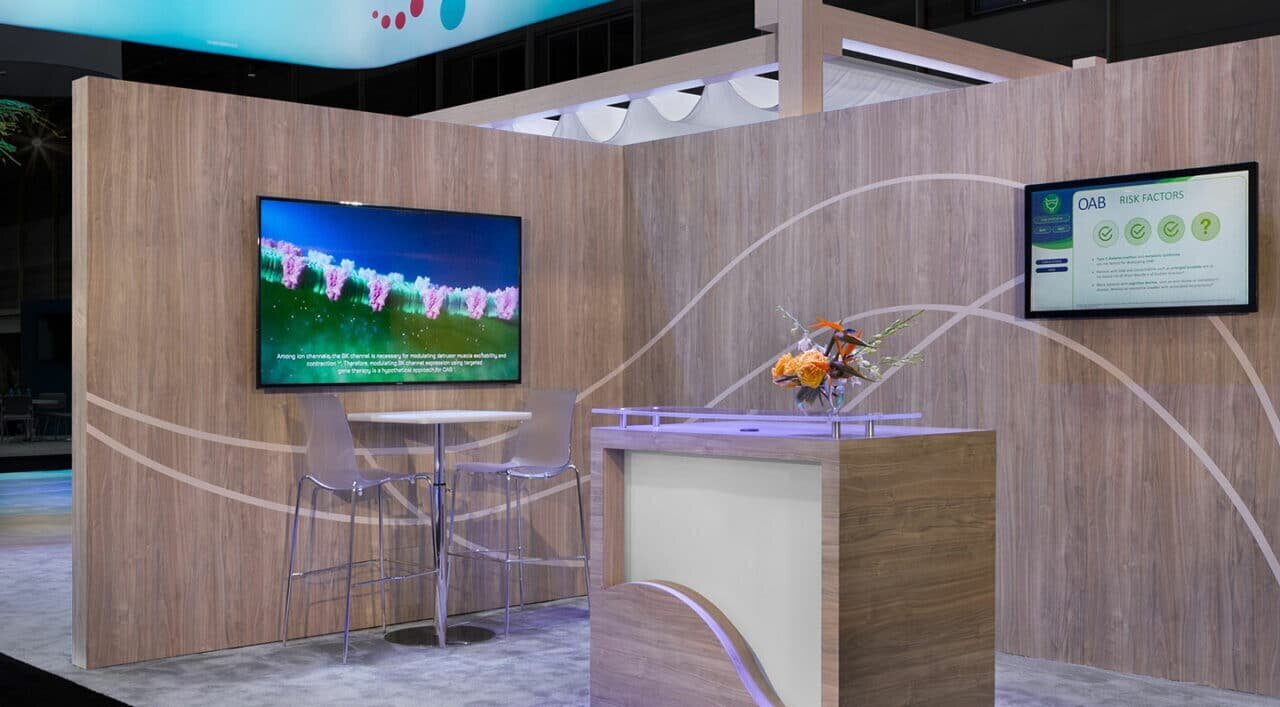
Companies today continue to move away from the old, sterile look of medical exhibits toward a more residential or lifestyle aesthetic. This trend reflects a larger shift in marketing that focuses on how products fit into peoples’ lives rather than just their clinical effectiveness.
Wood-look floors, soft lighting, and comfortable lounge furniture help entice busy healthcare professionals to enter the space, slow down, and spend time absorbing content and talking with booth staff. When doctors spend their entire day in clinical environments, they are naturally drawn to booth designs that feel warm and inviting.
Biophilic elements are also becoming increasingly common in modern tradeshow environments. Designers often add features that create more human-centric spaces, including:
- Natural wood tones. These materials soften the look of the booth and give it a premium, grounded feel.
- Integrated greenery. Potted plants and living walls act as natural dividers, enhancing the overall mood of the space.
- Ambient lighting zones. Avoiding harsh overhead lights in favor of warm, focused illumination makes the space feel more inviting.
- Curved architectural lines. Concave walls create a welcoming embrace that pulls attendees in, whereas convex curves can feel like a barrier.
- Textured upholstery. Using high-quality fabrics on seating areas encourages visitors to stay longer and relax during their visit.
Avoiding the Common Pitfalls of Booth Flow
Failing to consider booth flow and engagement can negatively impact a company’s tradeshow goals. One of the most frequent mistakes in booth design is what’s often called the castle effect: too many kiosks and counters placed on the aisle. This “wall” creates a physical and psychological barrier that tells attendees to keep moving. They may not even be consciously aware of the impulse, but it still affects their behavior.
If an entrance is partially blocked by a table or other obstruction, foot traffic can drop significantly. Keeping plenty of floor space open, especially around a booth’s perimeter, is a vital rule of thumb to ensure the environment feels accessible.
Another common issue is displaying too much text on walls or other structures. In a busy hall, attendees usually decide within a few seconds whether or not to step into a booth. If they see walls covered in print, they will likely walk away. The most effective layouts use a clear hierarchy of messaging with one bold text focal point that can be seen from a distance. Supporting details should stay at eye level on interior displays where visitors can read them at their own pace.
Leveraging Technology and Real-Time Data
The use of sensors and artificial intelligence (AI) is changing how designers evaluate and improve booth flow. These tools allow companies to watch for “dead zones” where engagement drops off. This data can be used to make changes for future shows or potentially even small overnight shifts during a multi-day event. For example, if data shows that people are entering the hall and approaching the booth from a different direction than originally expected, staff can take up different positions to greet those visitors more effectively.
Technology should always serve the brand story, and its usefulness evolves over time. For instance, while high-tech elements like VR and AR were once the gold standard for attraction, they have become so common that they no longer guarantee engagement.
It is important to remember that, in some cases, low-tech interactions, such as scale models or tactile building blocks, can attract and engage attendees who are tired of looking at screens. The key is to find the right balance between active zones for hands-on learning and passive zones for focused content consumption.
Beyond the Blueprint
Ultimately, a successful booth layout creates a dynamic environment that perfectly meets attendees’ needs and aligns with the brand’s goals. It’s an interesting chess game where every piece, from the placement of the espresso machine to the opacity of the meeting room walls, plays a role in the final result.
By focusing on the story first and staying mindful of the psychological impact of shapes, lighting, and flow, you can create a tradeshow presence that does much more than just take up space. It creates a lasting impression that continues long after the show floor lights go down.
Our experienced team can develop the ideal booth layout for achieving your business goals. Contact Slate360 to talk about your objectives and how we can help you achieve them.
About Slate360
Our team of seasoned healthcare industry pros crafts unique, immersive exhibit experiences that attract attendees and create lasting impressions of clients and their offerings. We work as an extension of a client’s team to streamline strategy development, execution, and analytics and to ensure an onsite or virtual trade show presence furthers their marketing objectives. https://slate360inc.com/
Slate360 Media Contact
Pam Laferriere, 657-204-1916