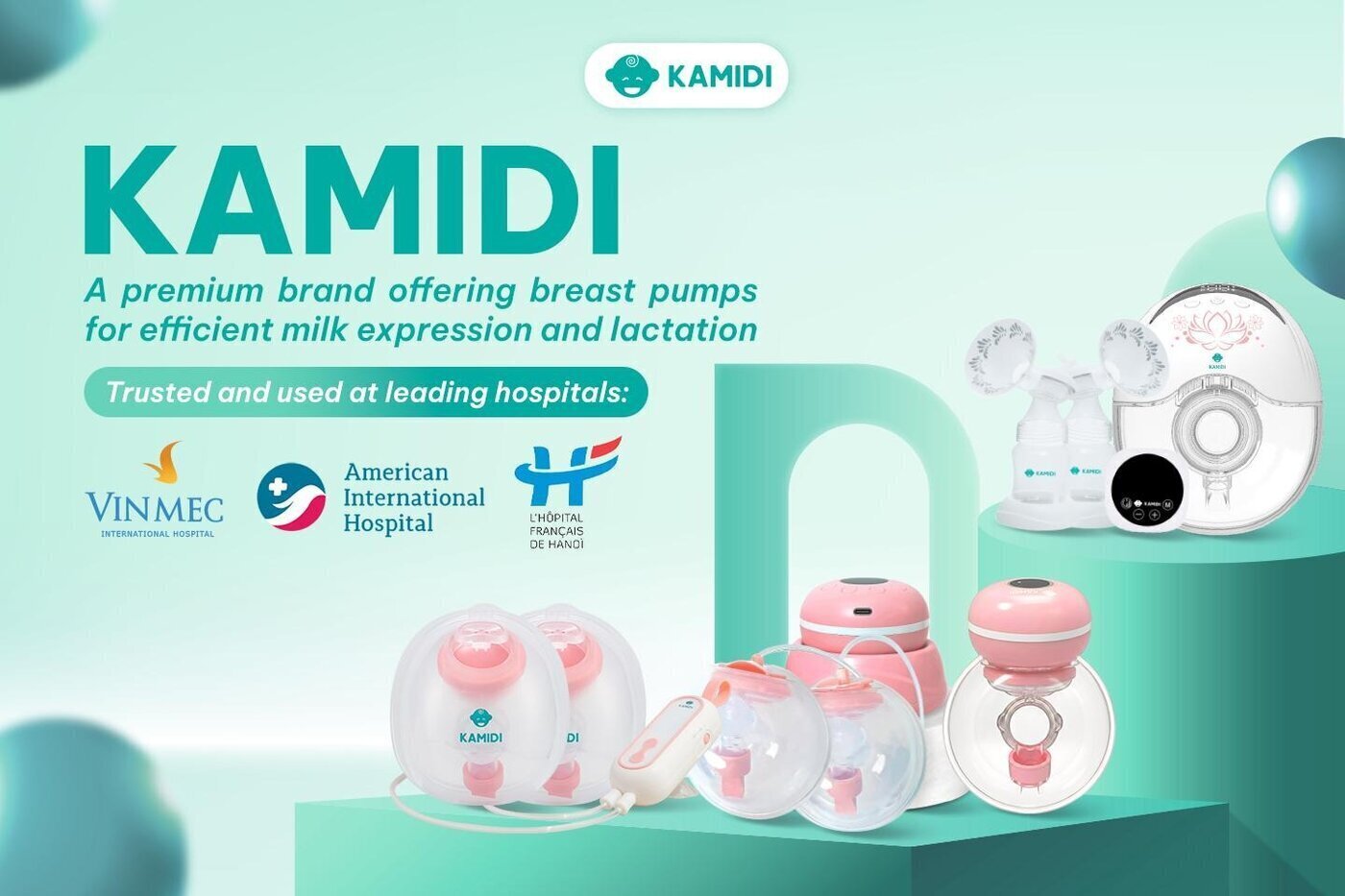
Kamidi has been selling breast pumps in Vietnam for a while now. The Kamidi Smart, their flagship hands-free model, has consistently sat at the top of domestic sales charts. Now the company is pushing into the U.S. market, and the angle isn't "more features." It's "better emptying."
That distinction matters more than it sounds. Any pump can be hands-free. Plenty of them are. The problem most nursing mothers run into isn't convenience; it's that hands-free pumps often sacrifice suction quality for portability. You get freedom of movement, but leave milk behind. Incomplete emptying leads to reduced supply over time, and for some mothers, clogged ducts.
Kamidi Smart tries to solve both at once.
What the Pump Actually Does Differently
The Smart runs four modes, Massage, Expression, Stimulation, and Full Emptying, across 12 suction levels. That's the spec sheet version. Here's what it means in practice:
Instead of one fixed suction rhythm, the pump cycles through phases designed to mimic how a baby actually nurses. Babies don't suck at one constant pressure. They start with quick, shallow pulls to trigger letdown, then shift to slower, deeper draws. The Kamidi Smart follows that same arc.
"We kept going back to the physiology," said the Kamidi team. "A pump that ignores the letdown reflex is just pulling. It's not stimulating production."
The Stimulation mode specifically targets the letdown reflex, that neurological trigger that tells the body to release milk. For mothers who struggle with letdown (especially when pumping, which is psychologically harder than direct nursing for many women), having a dedicated mode for it isn't a luxury. It's the difference between a productive session and sitting there for 20 minutes getting almost nothing.
The Full Emptying mode ramps suction gradually at the end of a session to draw out residual milk. Not glamorous. But mothers who've dealt with mastitis from incomplete emptying know exactly why this matters.
One thing Kamidi adjusted for the U.S. launch: an expanded adjustable vacuum range with finer level increments. American mothers, on average, pump more frequently and for longer durations than Vietnamese mothers. Workplace pumping culture is a big factor, so the pump needed both the range and the durability for heavier daily use.
The Lineup Behind the Smart
While the Smart leads the wireless push into the U.S., Kamidi's broader lineup includes specialized units, like the alternating-suction Easy 1, the soft-silicone-flange Max for mothers who prioritize comfort over portability, and the Flow 2in1 that switches between wired and wireless depending on the situation. Different anatomy, different schedules, different pain thresholds. Kamidi's bet is that one pump doesn't fit every mother, and they'd rather offer the right tool for each use case than pretend a single SKU solves everything.
But the Smart is the spearhead. It's the one Kamidi believes can compete directly in the U.S. hands-free segment.
Materials and Compliance: What's Actually Been Verified
This is where pump marketing tends to get sloppy, so let's be specific about what Kamidi is claiming and what they're not.
All materials that come into contact with milk, flanges, valves, and collection cups comply with FDA food-contact regulations. The silicone components are medical-grade and internationally certified. BPA-free plastics throughout. The device is manufactured in accordance with applicable U.S. regulatory standards.
That's the materials side. On the electrical and emissions side, the Smart carries CE and RoHS certification, which are European standards. Worth noting for context, but they don't carry regulatory weight in the U.S. What matters domestically is FCC compliance for electromagnetic compatibility, which the Smart has, and adherence to applicable electrical safety standards for consumer devices.
Manufacturing follows ISO quality management systems with multi-stage inspection before units ship. Not unique to Kamidi, most serious manufacturers operate this way, but it's the baseline that U.S. retail buyers expect to see documented.
What Kamidi is not claiming: FDA device clearance. Breast pumps in the U.S. are regulated by the FDA as Class II medical devices under 21 CFR 884.5160. That's a higher bar than food-contact compliance. Kamidi's current certifications cover material safety, electrical safety, and manufacturing quality. Any statements about the pump's regulatory status refer to those specific areas.
From Vietnam to the U.S: Why Now
Kamidi's tagline translates roughly to "Understand what mothers want." In Vietnam, that meant building pumps around the specific complaints they kept hearing: painful suction, weak emptying, and pumps that died after three months.
For the U.S. market, the challenge is different. The hands-free pump category is already crowded; Spectra, Medela, Willow, and Elvie all have established footholds and loyal users. Mothers aren't short on options. They're short on options that empty well and stay comfortable and don't cost $300+.
That's the gap Kamidi is targeting. A hands-free pump with genuine emptying performance, built with materials that hold up to daily sterilization, at a price point that doesn't require agonizing over the purchase.
"We didn't start by looking at what American pumps cost," said the Kamidi team. "We started by reading the one-star reviews. The complaints are the same everywhere: it doesn't empty, it hurts, it broke after two months. Those are engineering problems, not marketing problems."
Whether that approach translates to U.S. sales depends on whether American mothers notice the difference in a session or two. Based on the Vietnamese numbers, where the Smart has outsold most competitors in its category for consecutive quarters, a lot of mothers already have.
For business inquiries, collaborations, or more details, visit: www.kamidi.vn
Media info
Company Name: Kamidi Vietnam
Address: 62 Nguyen Huy Tuong Street, Thanh Xuan District, Hanoi, Vietnam
Phone: +84 33 66 55 466
Website: www.kamidi.vn
Email: [email protected].
Disclaimer: This press release may contain forward-looking statements. Forward-looking statements describe future expectations, plans, results, or strategies (including product offerings, regulatory plans and business plans) and may change without notice. You are cautioned that such statements are subject to a multitude of risks and uncertainties that could cause future circumstances, events, or results to differ materially from those projected in the forward-looking statements, including the risks that actual results may differ materially from those projected in the forward-looking statements.