Artificial intelligence has captured public attention through chatbots, image generators and coding assistants. But for many companies, the more immediate impact may be unfolding elsewhere: in the changing economics of cyber attack.
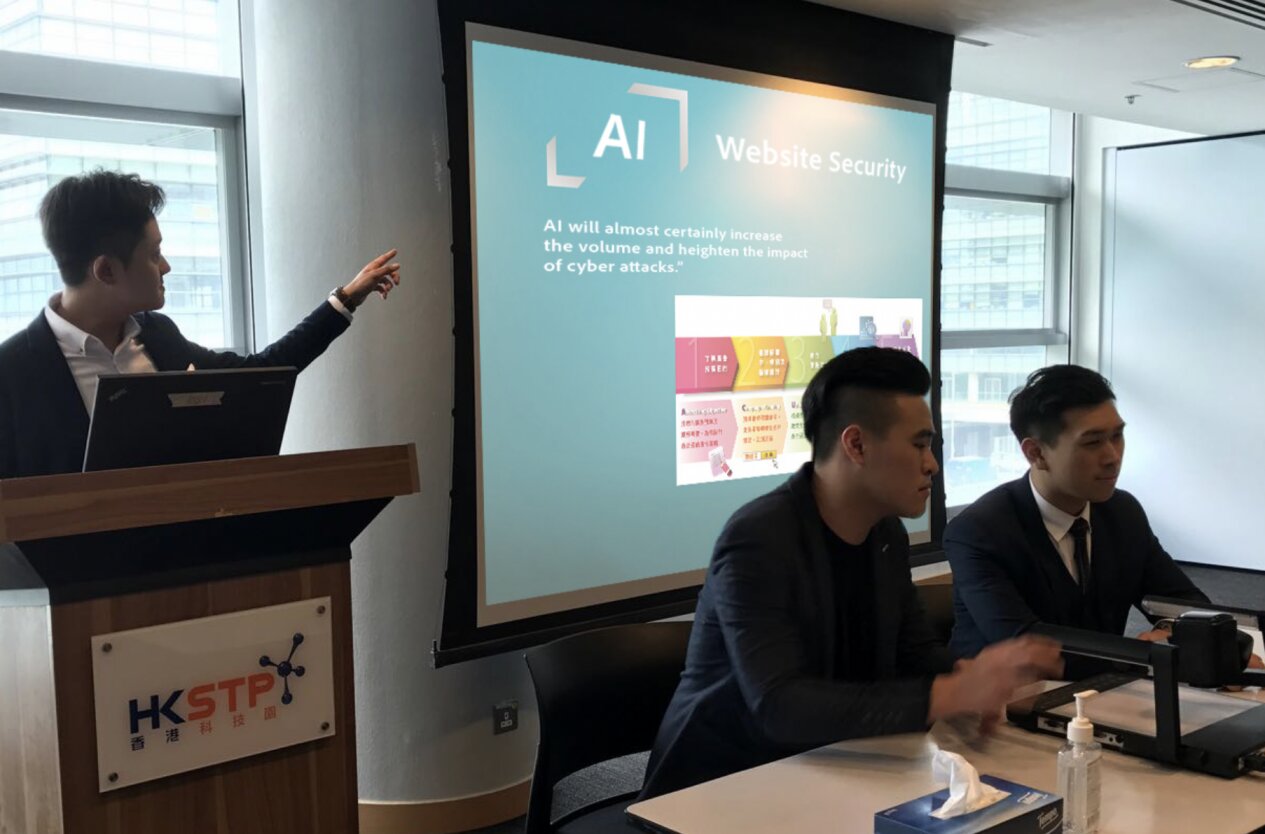
According to the UK’s National Cyber Security Centre, AI will “almost certainly increase the volume and heighten the impact of cyber attacks,” largely by making reconnaissance and social engineering more effective and harder to detect. The same assessment says AI is lowering the barrier for less-skilled attackers while making existing tactics faster, more scalable and more convincing.
That shift is beginning to change how website security is discussed by businesses that once treated it mainly as a back-end IT issue. “The biggest mistake is to think the threat has only become more technical,” said Lucas Wong, technical director at BINGO (SG). “In reality, it has also become more human-like. Attackers can now imitate language, timing and behaviour in ways that were much harder to achieve before.”
The result, Wong said, is that website defence is moving away from a model built primarily around static rules, signature matching and visible anomalies. “We used to focus on blocking what we already knew looked malicious,” he said. “Now the harder problem is distinguishing between what looks normal and what only pretends to be normal.”
One of the clearest examples is phishing. For years, suspicious wording and awkward grammar were among the easiest warning signs for employees and users to spot. That advantage is eroding. In its 2024 assessment of AI and cyber threat, the NCSC said generative AI can already be used to create more convincing interaction with victims, including lure documents without the translation, spelling and grammatical mistakes that often reveal phishing. It warned that this capability would very likely grow as models improve and adoption expands.
The Canadian Centre for Cyber Security has issued similar warnings. In guidance published this month, it advised organisations to monitor for AI-generated phishing and voice or video spoofs, and pointed to a real-world example: a British design and engineering firm that lost millions after an employee in Hong Kong was deceived during a deepfake-enabled video call that appeared to involve the company’s finance leadership.
For companies running public-facing websites, Wong argues that the implications go beyond email security. “A website is not only a content surface or sales channel,” he said. “It is also a trust interface. If an attacker can abuse forms, imitate user behaviour, poison content or exploit weak verification flows, the damage is not just technical. It becomes reputational very quickly.”
That broader risk is one reason behavioural analysis is gaining more attention. Rather than relying only on known attack fingerprints, many security teams are trying to identify patterns that diverge from normal human activity: unusual navigation rhythms, automated probing, suspicious bursts of form interaction or traffic that appears legitimate at first glance but behaves differently over time. The Canadian Centre for Cyber Security’s latest AI security primer recommends upgrades such as bot detection, adaptive authentication and stronger analytics against high-volume probing and credential stuffing, reflecting a wider move toward more adaptive, behaviour-based defence.
Wong said this is close to what many clients are now asking for in practice. “They are no longer only asking whether a firewall is installed or whether backups exist,” he said. “Increasingly, they want to know whether the site can detect abnormal behaviour early, whether access controls can adapt under pressure, and whether the business can respond before a small anomaly turns into a larger incident.”
That change matters because AI is not just improving deception; it is accelerating preparation. The NCSC said threat actors are already using AI to increase the efficiency of reconnaissance, phishing and coding, and warned that AI is highly likely to make vulnerable systems easier to identify at speed. In other words, the time defenders have to respond may continue to shrink.
For BINGO (SG), Wong said the conversation has increasingly shifted from perimeter defence to resilience design. In cross-border website and platform projects, he said, clients are looking for security models that can adapt across different languages, user flows and threat environments rather than applying the same rigid controls to every market. “The challenge is no longer only keeping malicious traffic out,” he said. “It is maintaining a credible user experience while filtering more sophisticated abuse.”
This is also why content integrity is becoming part of the security discussion. AI can now generate convincing fake reviews, synthetic registrations and manipulated media at scale, creating problems that do not always resemble traditional intrusions but can still distort search visibility, pollute databases and undermine trust. Microsoft’s 2025 Digital Defense Report said the spread of AI is benefiting both defenders and threat actors, and argued that traditional defences must be rethought as cyber threats become more dynamic and socially engineered.
Wong believes that for many brands, the next phase of website security will depend less on any single tool than on whether defence systems can keep learning. “No security framework is ever final,” he said. “The more adaptive the threat becomes, the less useful a static defence model will be.”
That does not mean every business needs to turn its website into a military-grade security operation. But it does suggest that the old idea of cybersecurity as a back-office safeguard is becoming outdated. As AI makes impersonation more convincing, probing more automated and abuse more scalable, security is increasingly tied to brand integrity, operational continuity and customer trust.
For businesses, then, the question is no longer whether AI changes the threat environment. According to public cyber agencies in the UK and Canada, it already does. The more urgent question is whether companies are redesigning their defences quickly enough to match it.
Company:BINGO(SG)
Website: https://www.sg-bingo.com/
Contact Person: Alex Lee
Telephone: +65 6028 2193
Email: [email protected]
City: Singapore
Disclaimer: This press release may contain forward-looking statements. Forward-looking statements describe future expectations, plans, results, or strategies (including product offerings, regulatory plans and business plans) and may change without notice. You are cautioned that such statements are subject to a multitude of risks and uncertainties that could cause future circumstances, events, or results to differ materially from those projected in the forward-looking statements, including the risks that actual results may differ materially from those projected in the forward-looking statements.
Original Source of the original story >> How AI-Driven Threats Are Changing Website Security