The 2026 Light of Internet Expo, a major event held as part of the World Internet Conference Wuzhen Summit, opened in Wuzhen on November 2. The expo brought together 671 companies from 54 countries and regions, showcasing more than 1,000 new products and technologies and highlighting the latest advances in the global internet industry.
Cloudsky, a global leader in real-time intelligent computing, showcased its latest advances in distributed computing infrastructure and applications at the expo. Cloud-based in-vehicle infotainment (IVI) systems solutions were among the highlights at its booth.
For in-vehicle infotainment systems, Cloudsky has jointly developed a cloud-based software platform with China Mobile (Shanghai) Industry Research Institute. The platform provides real-time intelligent services and computing resources for smart cockpits. As vehicles become increasingly intelligent, the limited processing power and long upgrade cycles of automotive-grade chips have made it difficult to run demanding applications, such as resource-intensive games and multiplayer experiences, in vehicles. The platform offloads workloads such as AI inference and content rendering to cloud and edge nodes, giving smart cockpits access to computing capacity that scales with demand. In its 1.0 phase, the platform supports cloud deployment for around a million applications, with capabilities continuously updated in the cloud. This significantly reduces applications’ dependence on in-vehicle hardware. In its 2.0 phase, the platform introduces an AI agent runtime, marking a shift from deploying applications in the cloud to executing tasks in the cloud. Users state their goals, and the system automatically selects tools and coordinates tasks across applications. The system also uses graphical user interface (GUI) automation to interact with applications that lack accessible APIs. Smartphone connectivity allows users to continue tasks across devices, even after leaving the vehicle.
The solution focuses on improving app experiences and supporting task execution in smart cockpits, while also helping bring intelligent features to conventional internal combustion engine vehicles. With cloud computing resources and the software platform, vehicles can access AI applications, interactive entertainment and AI agent services without extensive hardware replacement, allowing the cockpit experience to be continuously updated.
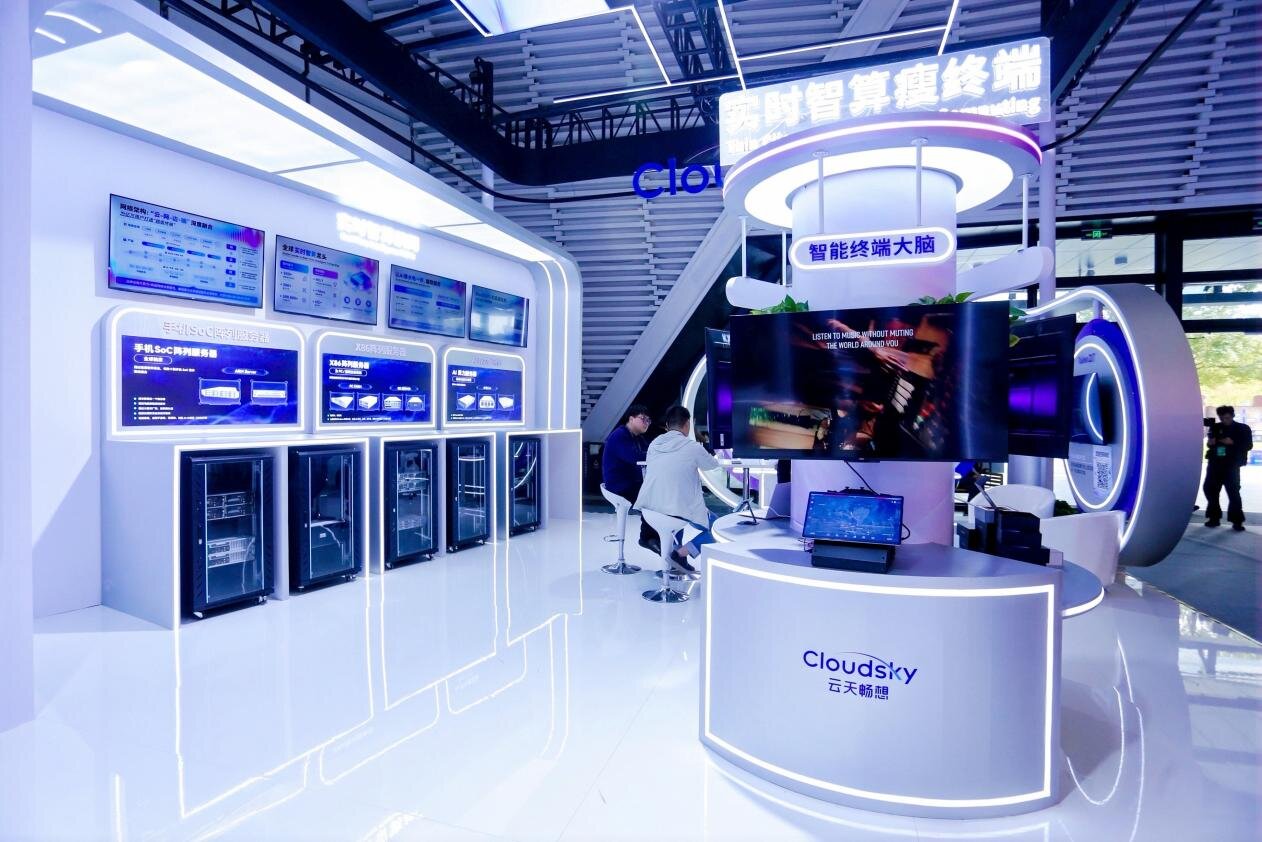
“Smartphones, computers, VR headsets, smart in-vehicle systems,robots — devices of the future will be lighter and slimmer, and every device will serve as a gateway to real-time intelligence,” said Crusoe Mao, chairman and CEO of Cloudsky.
Powering these smart devices and real-time interactive experiences is the distributed intelligent computing network that Cloudsky continues to build, designed for low-latency, real-time interaction. According to the company, its network now spans more than 300 cities worldwide, with over 200 edge nodes serving more than 600 million users. Its computing capabilities support a wide range of applications, including real-time rendering, cloud gaming, live streaming, smart devices, smart cockpits.
Contact Person: Jessie Meng
Tel:+86 075586956559