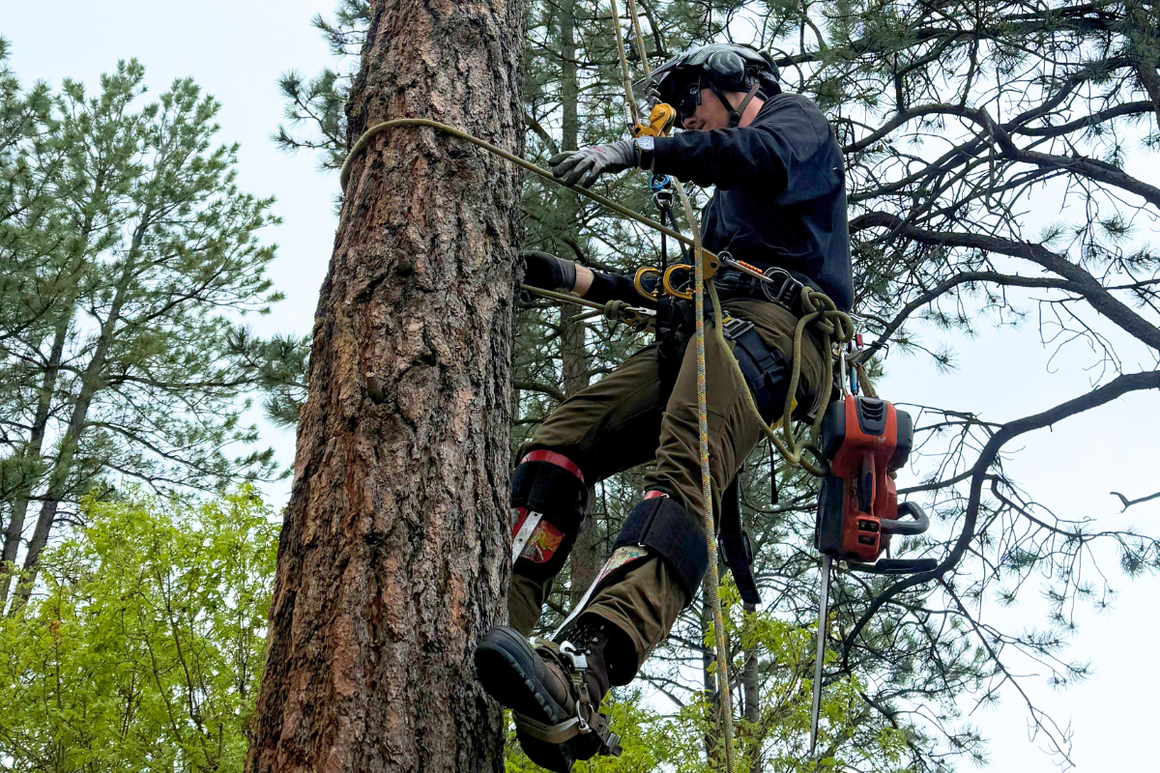
Knothead Tree and Lawn Care is expanding its tree services in Parker, CO this fall following the August 4, 2026 confirmation of emerald ash borer in a Parker front-yard ash tree — the first detection in Douglas County and one that arrived less than ten months after the Colorado State Forest Service forecast the pest would likely reach Castle Rock or Colorado Springs within five years. The timeline collapsed. The detection is documented, the county is confirmed, and the fall canopy-reading and spring-injection-booking window that determines outcomes for Parker and Castle Rock ash trees is open now.
The only high-efficacy treatment for emerald ash borer is a spring trunk injection, applied before adults emerge and new larvae begin feeding. Fall is when canopy symptoms are still readable, spring appointments are still available, and trees past the point of treatment can be scheduled for winter removal before they become hazards. Knothead Tree and Lawn Care is accepting fall evaluation appointments in Parker and Castle Rock now.
Douglas County went from zero percent extreme drought on June 2 to 51 percent on the September 1 U.S. Drought Monitor map. That stress accelerates EAB decline and can close the gap between a treatable ash and a removal candidate faster than a single season suggests.
"The pest is not coming. It is here. Fall is when the canopy shows you what happened this summer, and when spring treatment slots are still open. Both of those close at the same time."
— Knothead Tree and Lawn Care

Why the Parker Detection Changes the Fall Evaluation Calendar
The August 4, 2026 Parker detection is the first confirmed emerald ash borer find in Douglas County. The Colorado State Forest Service had identified Castle Rock and Colorado Springs as the next likely targets in its range-expansion forecast, and the Parker confirmation places the pest inside the county boundary ahead of that schedule.
Emerald ash borer does not announce itself on the canopy until significant damage has already occurred beneath the bark. Larvae feed on the phloem and cambium tissue that carries water and nutrients through the tree, cutting off vascular function from the inside. By the time thinning crowns, branch dieback, bark splits, or the characteristic S-shaped larval galleries become visible, the infestation is typically one to three years old. The August 4 detection reflects a population that has been present and feeding for at least that long, which means the Parker ash canopy entering fall 2026 is carrying damage that began in 2023 or 2024.
That lag between infestation and visible symptom is why the Colorado State Forest Service and Colorado State University Extension both emphasize proactive evaluation rather than reactive response. An ash tree that looks stressed but not obviously dying this September may still be a candidate for spring injection if the canopy loss is below the threshold that makes treatment viable. An ash that looks similar but has crossed that threshold needs a removal plan before it becomes a winter hazard. The difference between those two outcomes is an evaluation before leaf drop.
Fall in Douglas County: Why the Calendar Creates Urgency
Three biological and meteorological facts converge in September to make the timing of this expansion more than a promotional frame.
First, emerald ash borer adults complete their flight season in September. The larvae that will feed through the winter are hatching now from eggs laid this summer. Fall canopy symptoms reflect that summer's larval feeding, and leaf drop in October removes the most legible evidence of where the damage is concentrated. Evaluation before leaf drop is evaluation with more information than evaluation after it.
Second, spring trunk injections are the only treatment with documented high efficacy against emerald ash borer, according to Colorado State University Extension. Injection appointments in spring 2027 are bookable now. They are not bookable indefinitely. Parker and Castle Rock are a first-detection county, which means demand for certified arborist evaluations and treatment scheduling will increase through the fall and winter as more property owners recognize what the August 4 confirmation means for their ash trees.
Third, the drought. Douglas County's movement from zero to 51 percent extreme drought coverage between June and September 2026 is not a background condition. Drought-stressed ash trees lose canopy faster, reach the treatment-viability threshold sooner, and present a higher fall-and-winter structural risk when combined with EAB larval damage than they would under normal precipitation. An ash that would have been a spring-injection candidate under average moisture conditions may already be past that threshold after a summer like 2026.
Two Ash Trees, Two Timelines
Emerald ash borer does not affect every ash on the same schedule. Two ash trees on the same block in Parker can enter fall 2026 in very different conditions depending on when the infestation began, how much canopy remains, what the drought did to their overall health, and whether they are white ash or green ash — species with slightly different response profiles to EAB pressure.
An ash with moderate canopy thinning, sound bark, and no visible galleries may still be within the treatment threshold that makes spring injection a viable investment. An ash with extensive dieback, visible bark splits, and woodpecker activity indicating larvae beneath the surface may have already crossed into ash tree removal territory in Parker, CO, where the practical question shifts from how to save the tree to how to remove it safely before it fails.
The same thinning crown that looks like one problem is often two different problems requiring two different responses. A Parker tree service evaluation before leaf drop produces the site-specific finding that separates them. Without it, the default tends toward either premature removal of a treatable tree or delayed removal of a tree that is already a structural risk.
What Knothead Tree and Lawn Care Delivers in Parker and Castle Rock This Fall
Emerald Ash Borer Evaluation Parker, CO
Knothead Tree and Lawn Care's ISA certified arborists assess canopy viability, bark condition, larval gallery presence, and woodpecker activity tree by tree, producing a site-specific finding rather than a county-level assumption.
Spring 2027 Injection Booking
For ash trees with enough viable canopy to support treatment, fall evaluation findings connect directly with spring 2027 trunk injection scheduling before appointment capacity fills.
Ash Tree Removal Parker, CO
For ash trees past the treatment threshold, Knothead Tree and Lawn Care reserves winter removal capacity for properties evaluated this fall, keeping removal on a planned schedule rather than an emergency one.
Insect and Pest Sprays Douglas County
Beyond emerald ash borer, drought-stressed Douglas County trees carry elevated vulnerability to secondary pest and disease pressure. Knothead Tree and Lawn Care's plant health assessment covers the full picture of what the 2026 growing season left behind.
Castle Rock Tree Service and Parker Coverage
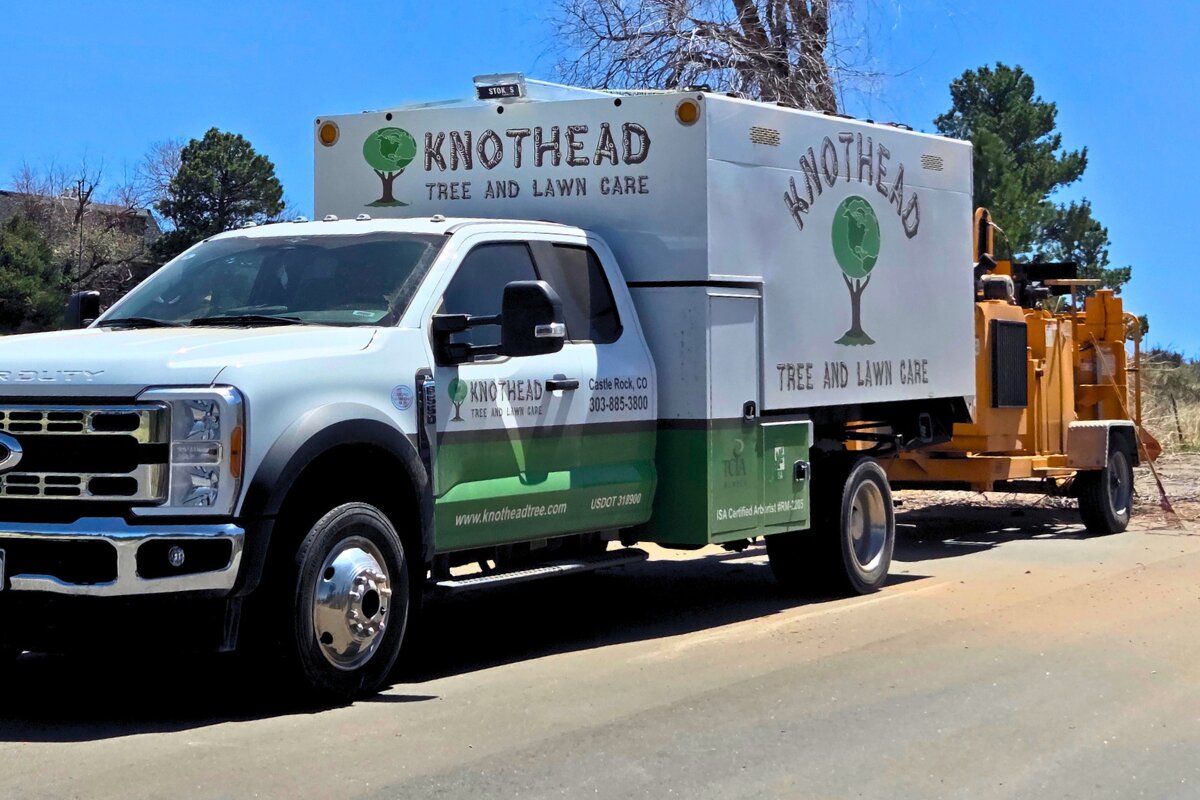
Knothead Tree and Lawn Care serves Parker, Castle Rock, and surrounding Douglas County communities. Fall evaluation appointments are available now through Knothead Tree and Lawn Care at knotheadtree.com.
Frequently Asked Questions
Can a Douglas County ash tree with emerald ash borer still be treated?
Potentially. Trees with less than roughly 30 to 50 percent canopy loss are generally candidates for trunk injection. Trees beyond that threshold are generally candidates for removal. Don't wait for symptoms to become unmistakable; by then the treatment window may already have closed.
When is the best time to treat an ash tree for EAB in Colorado?
Spring, before adult beetles emerge. Fall is when to evaluate and book the spring appointment. Waiting until spring to schedule means competing for slots in a first-detection county where demand is rising.
What does woodpecker activity on an ash tree indicate?
Woodpeckers feed on EAB larvae beneath the bark. Increased activity and flecking of the outer bark is one of the more reliable indicators of an active infestation. It warrants an evaluation.
Does the 2026 drought change the treatment calculation?
Yes. Drought stress accelerates canopy decline and can push a tree past the treatment threshold faster than EAB pressure alone. Evaluation before leaf drop accounts for both stressors together.
About Knothead Tree and Lawn Care
Knothead Tree and Lawn Care is a professional tree and lawn care company based in Castle Rock, Colorado, serving Parker, Castle Rock, and the surrounding Douglas County region. The company provides tree removal in Castle Rock, CO, tree trimming and pruning, emerald ash borer evaluation and treatment planning, insect and pest management, and related services for residential and commercial properties. To schedule a fall ash evaluation or learn more, visit Knothead Tree and Lawn Care at knotheadtree.com.
###
Contact:
Knothead Tree and Lawn Care
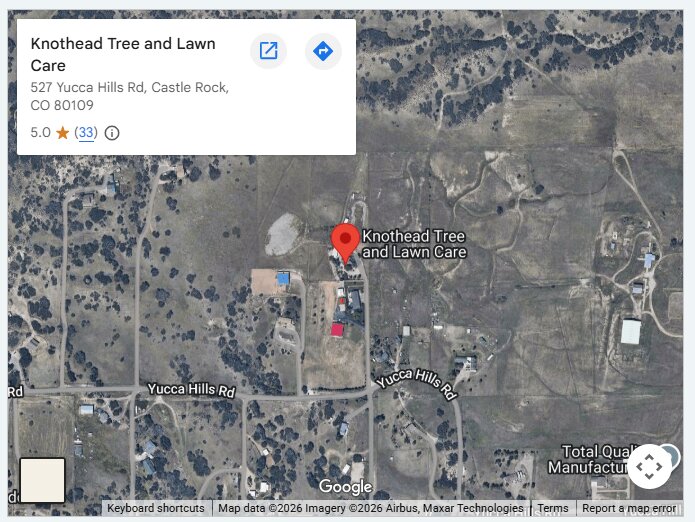
527 E Yucca Hills Road, Castle Rock, CO 80109
(303)885-3800
Social Media:
Facebook: www.facebook.com/knotheadtree
LinkedIn: www.linkedin.com/company/knothead/
newsroom: news.38digitalmarket.com